
1904: The new U.S. Army War College opens its doors to three majors and six captains, among them Capt. (future General of the Armies) John J. “Black Jack” Pershing.
1942: On Guadalcanal, a machine gun section led by Marine Cpl. Anthony Casamento is hit so badly during the fourth (and final) battle at the Matanikau River that all but Casamento were grievously wounded or killed. Despite his own wounds (he was hit 14 times during the engagement), Casamento single-handedly held his position and repelled numerous enemy attacks. Casamento will be awarded the Medal of Honor in 1980 after surviving eyewitnesses to his actions are found.
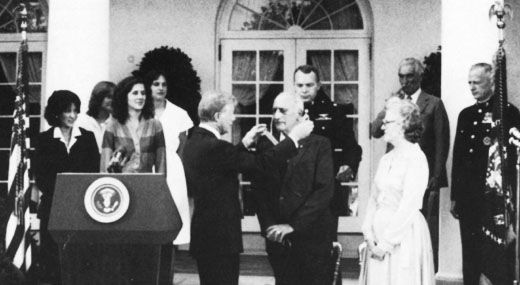
Marine Cpl. Anthony Casamento receiving Medal of Honor from President Carter
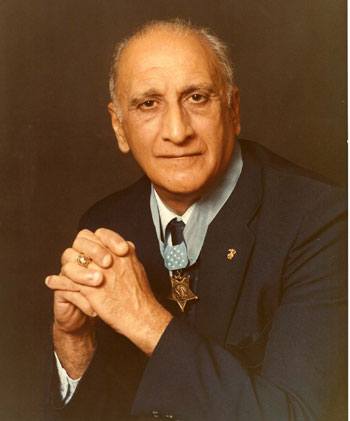
1943: The 3rd Marine Division, led by Gen. Allen H. Turnage, hits the beaches on Japanese-held Bougainville.
1944: Japan launches the first of some 9,000 hydrogen-filled balloon bombs towards the U.S. and Canada. By war’s end, only six Americans would be killed and a small amount of damage is inflicted by the bombs.
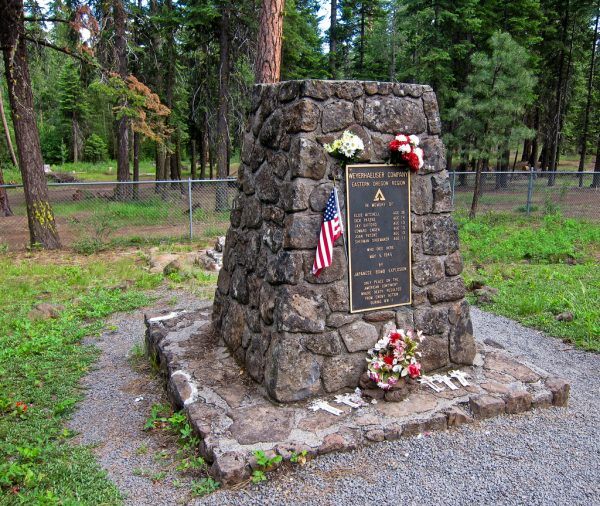
Mitchell Monument, Bly, Oregon where six people perished from one of Japan’s balloon bombs
Meanwhile, the Tokyo Rose, a B-29 “Superfortress” modified for photo reconnaissance, makes the first U.S. flight over Tokyo since the Doolittle Raid in 1942.
1952: (Featured Image) The U.S. tests the world’s first hydrogen bomb, codenamed “Ivy Mike”, at Eniwetok Atoll. The thermonuclear device, with a yield 1000 times greater than previous bombs, gave the United States a temporary leg up on the Soviet Union in the arms race. The blast digs a mile-wide, 150-ft. crater and literally wipes the small island of Elugelab off the face of the Earth.
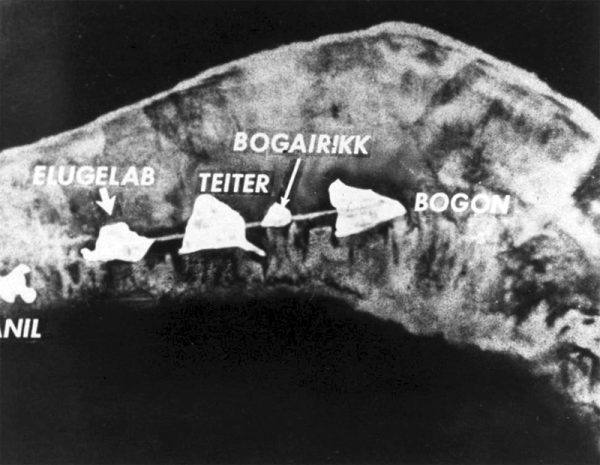
Elugelab Island before Ivy Mike
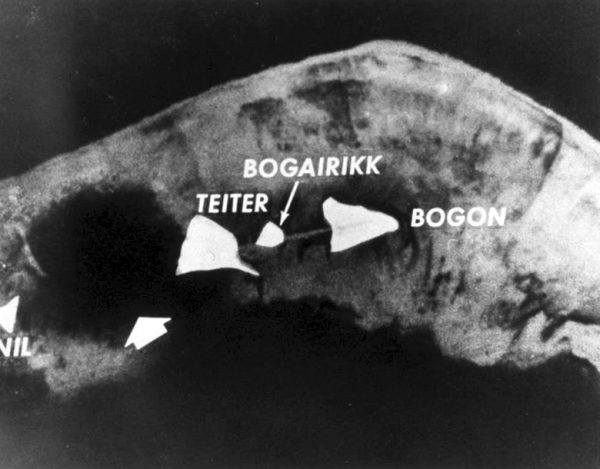
Elugelab Island after Ivy Mike
1983: During Operation “Urgent Fury”, 300 Marines from the 22nd Marine Amphibious Unit conduct an air and amphibious landing on the Caribbean island of Carriacou, 15 miles northeast of Grenada, in search of Cuban military forces.