
The Russians have recently held massive training exercises in Asia. They reportedly had over 300,000 soldiers, 36,000 tanks, 80 ships, 1000 aircraft, and even thousands of Chinese and Mongolian forces. They participated in a range of maneuvers ranging from airborne assaults to counter terrorism. These maneuvers seem incredibly scary, but many see through these tactics as largely posturing. Even though these events are largely posturing, it should refocus our attention on the real threats from Russia.
Similar to flawed NATO exercises that expect to transport, unload, and then advance soldiers in the face of enemy fire, Russia trying to mobilize and deploy that number of soldiers while railroads and transportation hubs are under attack from the West would be incredibly difficult. Even in peacetime the Russians have likely exaggerated the amount of men they could muster. If one regiment of the brigade participated than they count the entire regiment.
Despite the threats that come from a large military exercise, Russia does not have the economy and military for a major war. They have an aging population and a limited economy that has difficulty even funding normal business whenever the price of oil falls, which suggests they have little staying power in a major war. Russia has problems paying for the pensions of its current veterans and they have an economy smaller than that of Texas. Russia has modernized some elements of its army, but the bulk of its soldiers (about two-thirds), are under-trained, underpaid, and ill-equipped. Soldiers are reported to defect, and in the past they sold weapons on the black market to supplement their incomes.
Russia has been aggressive in throwing its weight around Eastern Europe by seizing the Crimean Peninsula and interfering in Ukraine and the Baltic States. But those operations are either low-level funding of irregular soldiers (in Ukraine), short and small actions (in Crimea), or aggressive interference such as flybys from their planes. None of these are large-scale wars. In fact, long-term actions in Syria revealed “systematic” technical problems with many of the systems they have upgraded. And their advanced Armata tanks have significant production problems as well (maybe it can take the F-35 out to dinner and compare notes on their dysfunction).
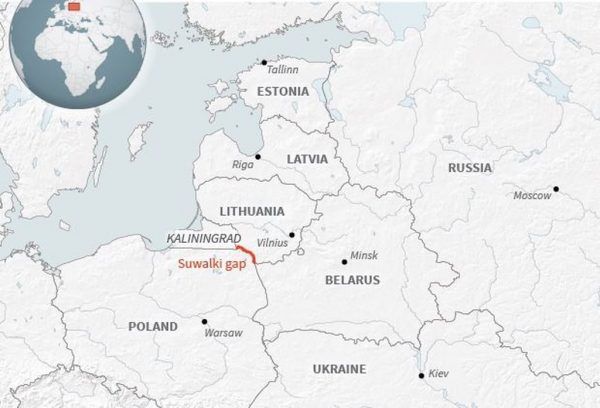
This is where we should refocus our attention because they still have the ability to cause trouble and pressure their neighbors. For example, RAND war games showed that Russian heavy units could overrun NATO soldiers in the Baltic States in 72 hours or less. They have enough tanks, planes, artillery, anti-aircraft guns, and specialized units placed in the Kaliningrad pocket, Belorussia and nearby Russian territory that they could prevent resupply and reinforcements into the area for days and even weeks. If conflict broke out in the Baltics and if the Russians invaded with tanks against the NATO light units, it would be the right scale and timeframe for Russia to seize key territory and inflict damage to NATO units and prestige. They could then dare NATO to fight a costly, long-term war over territory that was already lost. The U.S. would be faced with choices like leading a coalition similar to those that expelled Saddam from Kuwait, or risk other Eastern European countries thinking they will be gobbled up next as the Americans and Western Europeans stand by and watch.
There is some danger from Russia. Yet it likely won’t be from a large-scale war, but from a quick strike that enhances Russian interests and prestige, and which relies upon fear and surprise. It is vitally important to accurately assess Russian capabilities and intent. While this large-scale exercise might be more farce than fierce, Russia still has the capabilities for a quick war against close and underprepared targets.