
In late September 2007, a bright orange sign went up on a hospital door at the National Naval Medical Center in Bethesda, Maryland. It read, “Attention to all who enter here. If you are coming into this room with sorrow or to feel sorry for my wounds, go elsewhere.”
Navy SEAL officer Jason Redman had written it less than two weeks after an ambush in Iraq left him severely wounded. With dozens of surgeries still ahead of him, he had already decided how he would move forward.
In doing so, he began answering a question most of us will face at some point: what does it mean to stay unbreakable after life ambushes you? Jason has spent the years since living out his answer, and it has something to offer every one of us.
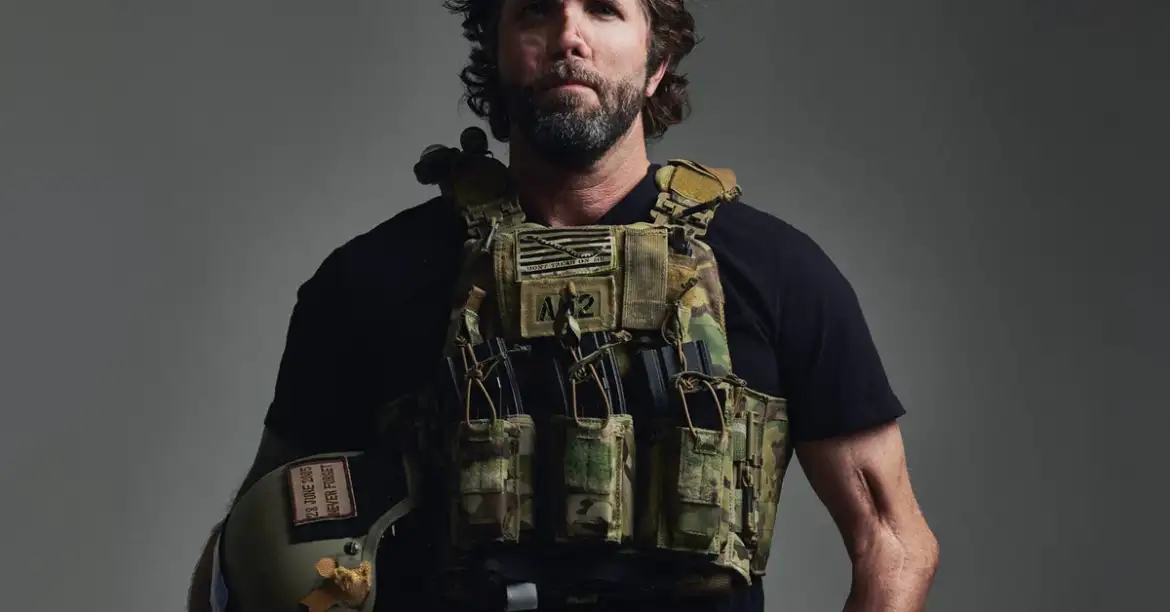
Jason Redman is a retired Navy SEAL who served a total of 21 years, with deployments to Central and South America, Afghanistan, and Iraq. His decorations include the Bronze Star with Valor and the Purple Heart. Today, he’s an author, speaker, and advocate for wounded veterans, as well as a husband to Erica and a father of three. He tells his full story in his memoir, The Trident: The Forging and Reforging of a Navy SEAL Leader.
Most of us will never hear machine-gun fire up close. Nearly all of us, though, will be “ambushed” by something we don’t expect—a layoff, a diagnosis, or the sudden loss of a loved one.
For Jason, two pivotal ambushes changed the trajectory of his life.
The first was one he caused. Early in his career, by his own account, ego and arrogance led to a leadership failure that nearly cost him his place in the Teams. He owned it, rebuilt trust, and went on to earn his commission as a SEAL officer.
The second ambush came for him. On September 13, 2007, outside Fallujah, Iraq, Jason was leading his assault team on a mission when they were ambushed under heavy machine-gun fire. He was severely wounded in the arm and face. Thirty-seven surgeries and years of rehabilitation followed.
Jason sorts life’s ambushes into three sizes—micro, mini, and major—and he has said the micro ones, the ambushes of the mind, are often the most dangerous. Some catch us off guard, and others, if we’re honest, we walk into ourselves. Whatever shape they take, resilience is built in how we respond.
In military terms, the X is the point of attack, the exact spot where an ambush hits. Staying there is how you get hit again. Survival depends on moving, even when every instinct says to freeze. Jason’s method of “Get Off the X” carries that same urgency into everyday life.
To help others find their footing in those moments, Jason created a framework he calls REACT:
His own first move came in that hospital room at Bethesda. Some visitors arrived with sorrow on their faces, and Jason could feel pity settling into the room. So he decided to set the tone himself. He wrote out the terms of his recovery and asked Erica to hang them on his door, where every visitor would see them before stepping inside.
“Attention to all who enter here. If you are coming into this room with sorrow or to feel sorry for my wounds, go elsewhere. The wounds I received, I got in a job I love, doing it for people I love, supporting the freedom of a country I deeply love. I am incredibly tough and will make a full recovery. What is full? That is the absolute utmost physically my body has the ability to recover. Then I will push that about 20% further through sheer mental tenacity. This room you are about to enter is a room of fun, optimism, and intense rapid regrowth. If you are not prepared for that, go elsewhere. From: The Management”
Long before he gave it a name, Jason was already living out REACT. His sign recognized the reality of his wounds, chose a direction, and communicated it to everyone who walked through the door.
The Sign on the Door traveled further than Jason ever imagined. It was signed by President George W. Bush and mentioned in Robert Gates’ Duty and Michelle Obama’s Becoming. Today it hangs in the center of the wounded ward at Walter Reed National Military Medical Center, where it greets wounded service members and their families as they begin their own recovery.
Behind every veteran are spouses, children, parents, caregivers, and friends who carry part of the weight. When Jason came home from Bethesda, Erica cared for his wounds while raising their three young children, staying strong for their family, surgery after surgery.
In Fallujah, his teammates fought through the ambush together, and everyone came home. That same teamwork is built into REACT, which asks you to communicate your direction to the people around you. As Jason puts it, “You’re never in a life ambush alone.”
Knowing how much that support had meant to his recovery, Jason founded Wounded Wear in 2009 (now the Combat Wounded Coalition) to give other combat-wounded veterans and their families a team of their own. Helping them, he has said, became one of the most important parts of his own healing.
Staying unbreakable is a choice you keep making—to own what happened, get off the X, and keep moving forward.
To the veteran fighting a battle no one else can see, the military spouse holding a family together, the first responder carrying what they’ve witnessed, and anyone facing illness, loss, or failure—your first step off the X might be writing your own Sign on the Door, or it might be something smaller. Give yourself the patience to find your footing, and keep choosing to move, however hard the ground gets.
The ambush may decide where your fight starts, but you decide where it goes from there.
To Jason, Erica, and the Redman family, and to the teammates who won the fight in Fallujah, thank you for your service.
To every veteran and military family, including those with wounds no one can see, thank you for what you gave and for what you continue to carry.
Jason Redman is a retired Navy SEAL known for surviving a 2007 ambush near Fallujah, Iraq, and for the “Sign on the Door” he hung on his hospital room during recovery. He founded Wounded Wear, now the Combat Wounded Coalition, and is a bestselling author and speaker known for his “Get Off the X” philosophy.
The Sign on the Door is a bright orange sign Jason wrote at Bethesda Naval Medical Center in 2007. It told visitors not to enter his room with sorrow or pity, because his wounds came from “a job I love, doing it for people I love, supporting the freedom of a country I deeply love.” It became a symbol of resilience for wounded warriors across the country.
The original sign was signed by President George W. Bush, framed, and donated back by Jason. It now hangs in the center of the wounded ward at Walter Reed National Military Medical Center.
Jason is the author of The Trident: The Forging and Reforging of a Navy SEAL Leader (a New York Times bestseller), Overcome: Crush Adversity with the Leadership Techniques of America’s Toughest Warriors, and the Pointman Planner. He co-wrote Mission: Invincible Marriage with his wife, Erica.
The Combat Wounded Coalition is a nonprofit Jason founded in 2009 as Wounded Wear. It took its current name in 2015. It supports combat-wounded veterans and families of the fallen through leadership courses, events, and opportunities.
Jason’s story reflects the reality of service: the sacrifice, the visible and invisible wounds, and the families who carry them, too. It’s also a reminder that many veterans keep serving long after they come home, often by serving each other.
Welcome to Wider Europe, RFE/RL’s newsletter focusing on the key issues concerning the European Union, NATO, and other institutions and their relationships with the Western Balkans and Europe’s Eastern neighborhoods.
I’m RFE/RL Europe Editor Rikard Jozwiak, and this week I am drilling down on two issues: why the EU cannot agree on an envoy for Russia-Ukraine peace talks and what safeguards Montenegro could face when it joins the bloc.
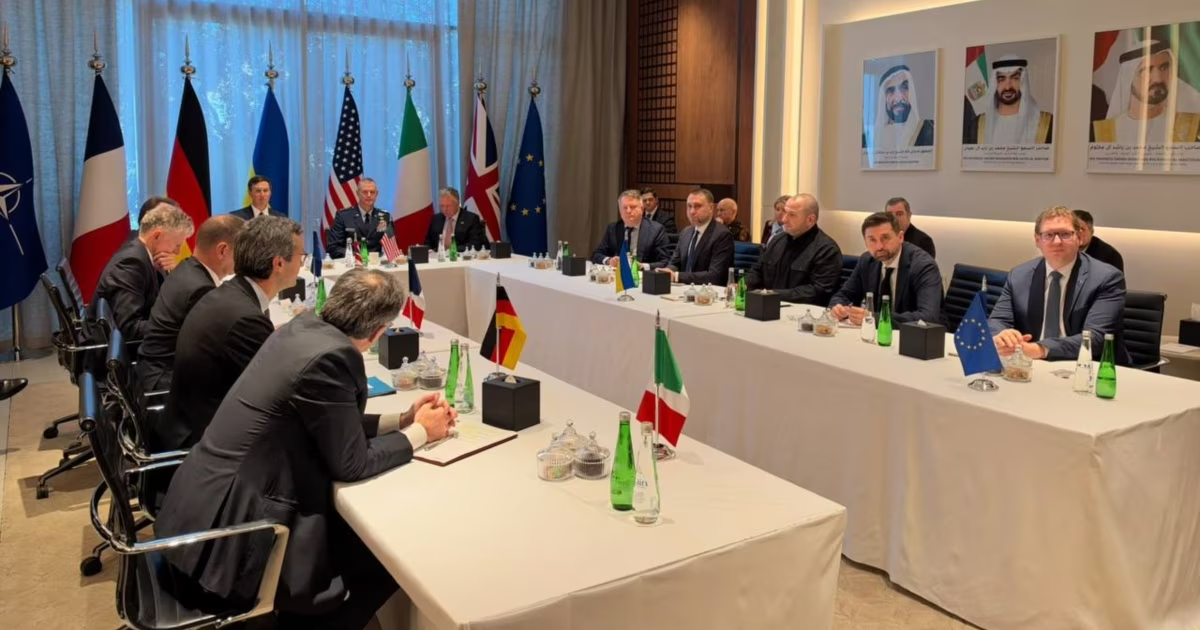
What You Need To Know: As US-led talks between Russia and Ukraine get underway in Abu Dhabi on November 10-11, the European Union and its member states are once again fretting about who will represent them, having failed to secure a seat at the top table in the Emirati capital.
But they will not be completely absent from Abu Dhabi.
The national-security advisers of the so-called “E3” — France, Germany and the non-EU United Kingdom — will be there, as will their Italian counterpart.
Bjorn Seibert, European Commission President Ursula von der Leyen’s head of cabinet, Anna Maria Boura, the main foreign policy adviser to European Council President Antonio Costa; and Geoffrey Van Leeuwen, NATO Secretary-General Mark Rutte’s chief of staff, are also attending.
But like the representatives of the four major European nations, they will not be in the negotiating room. Instead, according to European diplomats who spoke to RFE/RL, they will spend their time “waiting in the corridors” and being briefed by the United States before and after the talks.
In that sense, not much has changed since Donald Trump took office in early 2025. Despite multiple rounds of peace talks in various locations and formats, Europe remains very much on the sidelines.
Deep Background: What has made the Europeans particularly nervous this time, however, is a comment by Jared Kushner, the US president’s son-in-law and peace envoy, who last week suggested that a broader European security architecture could be part of any peace deal.
The Europeans have responded defiantly, noting that nothing can be decided about them — or Ukraine for that matter — above their heads and without their consent.
They have also pointed out that they have real cards to play here, including the wide-ranging sanctions imposed on Moscow and the freeze on Russian assets. Moreover, it is up to them to decide whether and when Ukraine can join the EU.
Yet despite all the tough talk, they will, once again, spend time this week discussing whether to agree on a single envoy — or perhaps several — to represent them in future talks.
Having an envoy should at least improve their chances of securing a seat at the table, according to EU officials supporting the initiative.
The issue will be discussed when EU leaders assemble for an informal summit in Dublin on November 13, and potentially even more informally a day earlier, when leaders from across Europe, with the exception of Belarus and Russia, descend on the Irish capital for the semiannual European Political Community (EPC) gathering.
The debate was prompted by a rather angry letter that Italian Prime Minister Giorgia Meloni sent to Costa last week, and which was seen by RFE/RL. In it, she said that she was “convinced that we all realize how, by projecting the image of Europe acting in an uncoordinated manner, we are simply playing into the hands of those who want this war to continue. I think this is unacceptable, considering that human lives and the future of our security are at stake.”
She was referring to the various formats in which European nations had participated in a seemingly uncoordinated manner according to her, including the recent phone call between Russian President Vladimir Putin and Finnish President Alexander Stubb accompanied by Norwegian Prime Minister Jonas Gahr Store.
Meloni added that “Europe needs to speak with a single, authoritative voice,” but she was also quick to point out that “I am not asking for a place for Italy in this or that format.”
In a more diplomatic response, Costa thanked Meloni for setting out her concerns “so clearly” and underlined that “Europe needs to act with coherence, unity and determination.”
Drilling Down
What You Need To Know: In its annual EU enlargement report last week, the European Commission reiterated its hope that Montenegro will conclude accession negotiations by the end of the year.
To date, 23 of the 33 main policy chapters have been provisionally closed, and the EU executive believes that not only the remaining 10 but also two less talked-about additional chapters — numbers 34 and 35 – can be concluded by then. Most European diplomats consider that an extremely ambitious goal.
Unlike the 33 main chapters, these two are usually dealt with toward the very end of the accession process, as work on drafting the accession treaty gathers pace. The European Commission hopes the treaty can be signed with Podgorica in June 2027.
We are not quite there yet. The working group tasked with drafting the treaty is still meeting just once a week in Brussels, rather than almost daily, as tends to happen when the process really picks up speed.
Chapter 34 should be relatively straightforward to conclude. It deals with institutions, meaning the rules needed to ensure that Montenegro is fairly represented in EU institutions, including having its own commissioner and a number of members in the European Parliament that reflects the size of its population.
Deep Background: Chapter 35, however, might prove to be trickier.
Nominally titled “Other Issues,” it allows EU member states to include a wide range of additional provisions.
Sometimes the chapter contains little of substance, but this time Montenegro may not be so lucky.
The EU is planning to include new safeguard clauses proposed by the European Commission in early October.
These measures essentially create something of a two-tier system between current EU member states and newcomers, who could now face being stripped of both money and voting rights more easily than is possible for the bloc’s current crop of 27 countries.
As the frontrunner for EU accession, Montenegro would be the first test case for the new rules, other countries hoping to join in the coming years — including as Albania, Moldova, and Ukraine – could also face these safeguards.
Brussels has proposed the measures partly to reassure member states skeptical of further enlargement and, as several EU diplomats put it, “to avoid another Hungary.”
This is, of course, a reference to Brussels’ decade-long struggles with Viktor Orban’s government over various rule-of-law issues, which never resulted in Budapest losing its voting rights as that move required unanimity — something that always proved elusive.
Drilling Down
The big events this week will be the two summits in Dublin: first, the meeting of the European Political Community on November 12, followed by an informal EU summit the next day.
Also worth watching is the European Parliament’s two-day plenary session in Brussels on November 11-12, where lawmakers will discuss efforts to secure the return of Ukrainian children abducted by Russia, as well as the prospect of further EU sanctions against Moscow.
That’s all for this week!
Feel free to reach out to me on any of these issues on X @RikardJozwiak, or via e-mail at [email protected].
Until next time,
Rikard Jozwiak
If you enjoyed this briefing and don’t want to miss the next edition subscribe here.
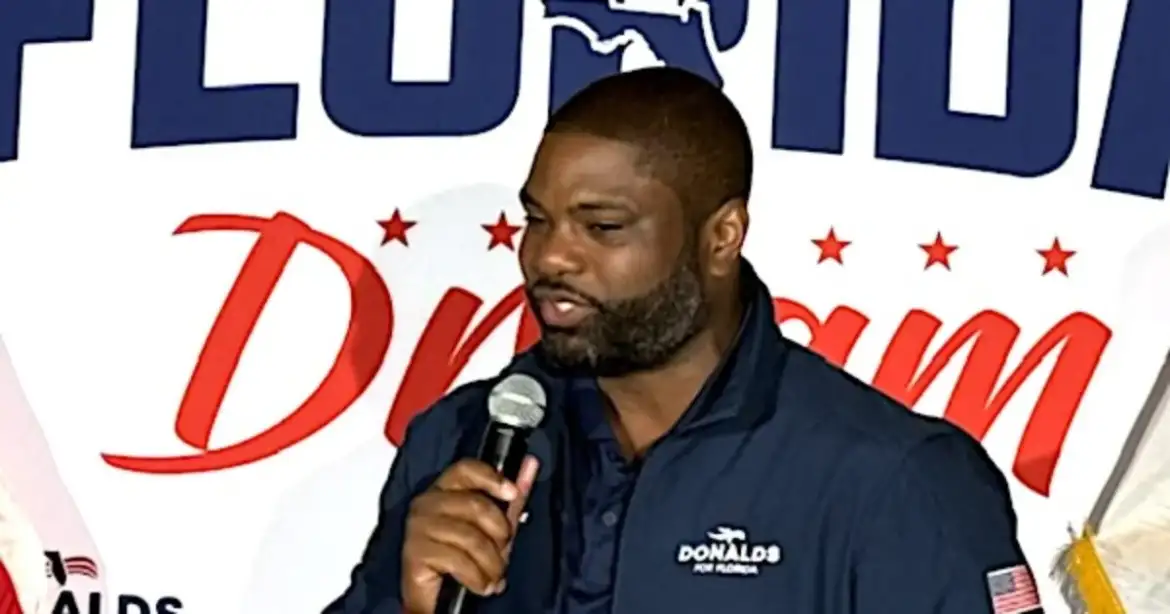
Greetings from the free state of Florida! Where America’s founding principles of our God-given rights of “life, liberty, and the pursuit of happiness” are still available without government interference. Kudos to our term-limited governor, Ron DeSantis. Congratulations to his successor, Gov.-elect Byron Donalds.
Of course, to many pro-life, pro-religious freedom, conservative Christians, the midterm elections were a major disappointment.
Christian author and evangelist Dr. Alex McFarland, opines: “America should not be surprised that our nation, largely existing in flagrant rejection of God’s Word, is reaping the consequences of its own rebellion.”
Tony Perkins, president of the Family Research Council, writes: “In the 2018 midterms, white evangelicals made up 26% of the vote. On Tuesday, according to NBC, it was 17%. That’s a decline of 9 percentage points.” Joshua Arnold of the same organization wrote, “Half of evangelicals stayed home in GOP election rout.”
Our American Values President Gary Bauer, former Reagan administration adviser, comments: “Millions of well-meaning people – our neighbors, friends and for some even family members – voted for some very bad ideas, and the consequences are going to be horrific. … Their election actually empowers the extreme Marxist and Islamist movements that are openly threatening America. And, sadly, I have to say that millions of Christians also empowered the extremists by not voting. These AWOL Christians are morally equivalent to someone living in colonial America and saying, ‘I don’t want to get involved in that revolution thing. We should just love everybody.’ Or living in the 1860s and saying, ‘I’m not volunteering for the Union Army. I don’t want to force my values on other people.’”
Bauer adds: “We can’t rail against what is happening to our country if millions of people who are part of the body of Christ are unwilling to engage in order to save our country and the future of our children and grandchildren.”
In addition to the kitchen table issues and the war in Iran, religion played a bigger role in the midterms than we realize.
For example, the AP reports that “Democrats with a Christian Message Helped Flip the Congress.”
An Article in the Washington Post asks: “Have Democrats cracked the code on religion?” That would appear to be the case. To me, this underscores the need for better understanding of what the Bible actually says.
Christian author and leader Rev. James Garlow of Well Versed writes about: “The 11 Pastors* in the House and the Senate. Three True Shepherds and Eight False Prophets? (*I am including one seminarian as a ‘pastor.’)” He’s argues that by Biblical standards, most of these “Christian politicians” fall way short.
Here are a couple of examples that we could consider: Some of these politicians favor abortion rights. Some even say that the Bible is supposedly “pro-choice.” (But that doesn’t add up, as I’ve written before.) These politicians are on record in favor of the deliberate destruction of unborn babies.
Many on the left today even favor abortion up to the moment of birth – oh, and they demand that we the taxpayers must fund the bill. These politicians were once in their mothers’ wombs, but they can’t find in their hearts to extend grace for those yet to be born.
Going further, these politicians are in favor of the option of surgery on confused young people’s private parts to remove perfectly functioning body parts in order to supposedly “transition” him or her to become a person of the opposite sex. It never works. And you can’t undo the “irreversible damage.” It only leads to a lot of human misery. And in some cases, suicide. That stance is so anti-Christian and so uncompassionate – yet it is dressed up as supposedly compassionate.
Thankfully, the voters in four states – liberal Colorado and Washington, plus Nebraska and Arizona – elected to not allow boys (claiming to be girls) to compete in girls’ sports, “despite the blue wave.”
There’s much more that could be said about the midterm election. One thing to add: I appreciate many of the positive things President Trump has done – e.g., closing the border, advancing religious freedom, etc., but I would like to see him embrace more humility.
Of course, boastful pride can be found on both sides of aisle. Sen.-elect Abdul El-Sayed was obnoxiously arrogant in his acceptance speech.
The Bible includes many warnings against pride. God opposes the proud, but gives grace to the humble. Perhaps the most famous one is summarized as “Pride goes before a fall.”
We should pray for the country and pray for repentance for a nation that has strayed far from the vision of our settlers and founders, as one nation under God. And that repentance could well begin with God’s people humbling ourselves before Him, repenting of our sins and turning from our wicked ways, as stated so emphatically in 2 Chronicles 7:14. If we truly do so, He promises to heal the land.
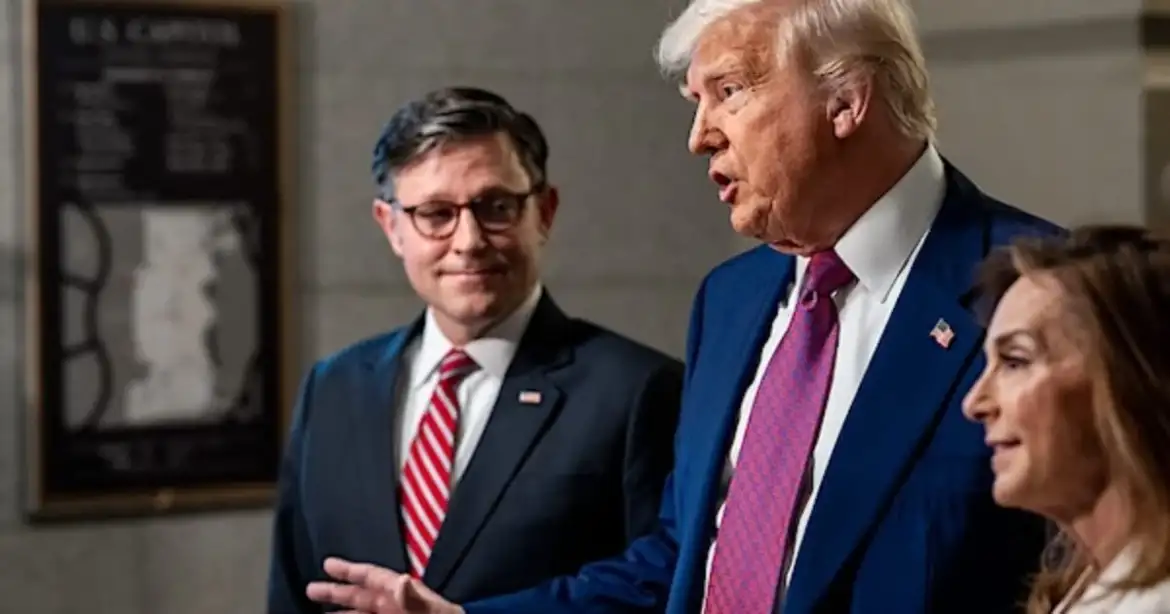
With just 20 scheduled legislative days remaining in the House and 22 in the Senate before the new Congress takes office on January 3, 2027, the House Freedom Caucus has delivered an explosive, last-minute America First agenda to House Speaker Mike Johnson and Senate Majority Leader John Thune.
On Monday, members of the House Freedom Caucus released an ambitious legislative roadmap demanding that Republicans use their final weeks in power to deliver on President Donald Trump’s priorities before Democrats take control on January 3, 2027.
The agenda includes mandatory voter identification in federal elections, sweeping border security legislation, a crackdown on sanctuary cities, congressional term limits, a ban on government officials trading stocks, major energy reforms, and at least $1 trillion in federal spending reductions.
The conservative lawmakers are also demanding that the Senate confirm as many Trump nominees as possible before Republicans surrender their majority.
Read the letter below:
Dear Speaker Johnson and Majority Leader Thune –
In the two months remaining in the 119th Congress, we have an enormous amount of unfinished business to preserve and protect the Republic from an incoming majority party hell-bent on radically changing it. We must deny them every legislative leverage point possible.
Let’s hold the line and finish the work. In no particular order, we should take action to:
1. Pass a reconciliation package to deal with debt, spending, and tax relief:
Fund Defense Modernization (missiles, boats, drones, space, etc.) to stop Democrats from using it to leverage for expansion of the welfare state;
Provide significant tax relief for families – particularly for healthcare: Expansion of HSA’s in terms of both savings amount and use to drive down the price of healthcare for families, and codification of Short-Term Limited Duration Plans;
Provide at least $1 trillion in spending reductions that will more than pay for all these items and result in deficit reduction.
2. Codify the President’s border security policies and ban sanctuary cities – we passed H.R. 9773 and H.R. 7640 out of Judiciary, and they are ready for action on the House floor.
3. Limit annual spending to current levels (for 3rd consecutive year) via a CR or Appropriations without policy riders that divide us or constrain the Administration’s ability to eliminate wasteful, fraudulent, and abusive government spending. Oppose a year-end omnibus filled with poison pills.
4. Pass a robust permitting bill to expand American energy dominance and drive down the price of fuel and electricity for families.
5. Reform Congress by:
Passing a ban on stock trading for Congress as well as the Executive and Judicial Branches, including the President and his family;
Passing Term Limits – we should ignore any outside groups, and pass the number of terms we can all agree to.
6. Only reauthorize programs set to expire (e.g., Farm Bill, Surface Transportation) if they are fiscally responsible and reduce the prices of food and consumer goods, like vehicles, while protecting the privacy rights of Americans by ending surveillance technology mandates or funding. These bills should not include any policy riders that undo or delay deficit reduction provisions secured during this Congress.
7. Pass legislation requiring voter ID in federal elections.
8. Confirm as many Presidential nominees as possible in the Senate.
Some of us called for action after our first reconciliation package to continue to move to support the American people. Unfortunately, that agenda stalled, and now we will no longer have the majority in the next Congress. We respectfully request that we take action in the next 60 days to protect the citizens we represent.
Moreover, we request that we not leave town until we accomplish these objectives. Every one of us – including those leaving Congress on January 3rd – should be committed to finishing the job.
With great respect,
The House Freedom Caucus Board
🚨BREAKING: House Freedom Caucus leadership just dropped a lame-duck roadmap for @SpeakerJohnson and @LeaderJohnThune.
Strip Democrat leverage. Deliver real wins. Do it before the clock runs out.
No leaving town until it’s done — let’s finish the job!
— House Freedom Caucus (@freedomcaucus) November 9, 2026
This article originally appeared on The Gateway Pundit.com.


President Donald Trump received the green light to resume border wall construction in Texas.
The Supreme Court paused a federal judge’s order on Monday which had halted construction of the president’s southern border wall in Texas, according to the order. After Democrats swept statewide offices in the Lone Star state, the Trump administration can resume building border barriers while legal battles continue.
“The Government’s interest therefore outweighs any aesthetic, recreational, and environmental harm alleged by respondents,” the court decision stated in part. “The injunction thus impedes the Government from advancing its ‘compelling interests’ in border security and integrity.”
The decision comes less than a week after Texas elected Gina Hinojosa, who will become the state’s first Democratic governor in more than three decades. Democrats also retook control of the state House of Representatives and swept all of the Lone Star state’s other statewide offices up for election.
U.S. District Judge Kathleen Cardone — a George W. Bush appointee — prevented construction of the border wall on Oct. 2 while considering several legal complaints from local parties such as a river guide and environmental group, according to the New York Times.
Opponents claimed that building the wall in the Big Bend Sector would “diminish their ability to use and enjoy the area,” the justices added.
The Department of Homeland Security is federally empowered to disregard environmental regulations, the justices concluded was “a clear preference for expeditious border construction over the very harms [opponents] assert,” the NYT reported.
Justice Ketanji Brown Jackson — an appointee of former President Joe Biden — was the only justice who dissented, the order stated.
Content created by The Daily Caller News Foundation is available without charge to any eligible news publisher that can provide a large audience. For licensing opportunities of our original content, please contact [email protected].
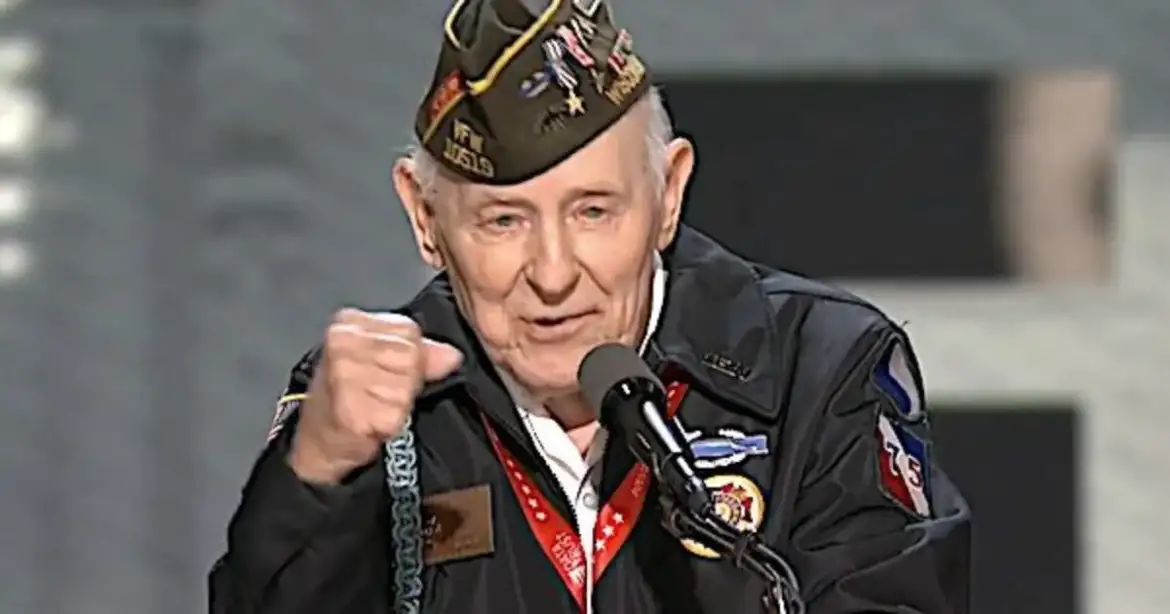
Wednesday is Veterans Day, one of those holidays we tend to overlook. There are no sales. We do not visit the cemetery to decorate graves. There are no fireworks and few parades.
Veterans Day started as Armistice Day to mark the armistice that ended fighting in World War I. After World War II and the Korean War – which followed what was supposed to be “the war to end all wars” – Veterans Day was established to honor all those who served in peace or war.
It is fitting to honor the patriots who served their country, but in doing so, we need to consider why a republic goes to war. America does not fight for glory or territory, but to keep our nation free. Blood is the price we pay for liberty, as we have since the first volley was fired at Concord’s North Bridge.
If not for that blood price, we would be speaking German, Japanese or Arabic today.
Someone once asked conservative icon William F. Buckley Jr. whether there was anything worse than war. He replied, “Yes, slavery.” I would add genocide and unchecked aggression, which always lead to greater carnage in the long run, as Munich did.
Often, war is unavoidable. In 1861, President Lincoln could have let the Southern states secede. Instead, he led us into a war in which three-quarters of a million died to preserve the Union. Eventually, it became a fight against slavery too.
We did not choose to fight Germany and Japan in 1941 or to fight international Islam before Sept. 11, 2001. World War II started with a sneak attack on Pearl Harbor while we were negotiating a way to avoid war. The World Trade Center was another attack without a declaration of war.
It is horrible to hear the screams of men dying on a battlefield. It is more horrible still to hear the screams of women whose breasts are hacked off after they have been gang-raped, one of the atrocities committed during the Oct. 7, 2023, massacre in Israel.
After each war, some historians decide that it was unnecessary. World War I is a case in point. The Great War resulted in 9 million to 11 million military deaths and probably an equal number of dead civilians. Yet if America had not entered it in 1917, it would have been longer and bloodier. Britain and France might have lost, and Kaiser Wilhelm would have turned Europe into a German colony marked by mass graves.
We fought in Korea and Vietnam to stop the spread of communism. That could have ended better if politicians had not overruled the generals. Still, it kept South Korea and most of Southeast Asia free. If we had not intervened, killing fields would have dotted the landscape.
Hiroshima and Nagasaki were terrible, but without them, the Japanese military would have met an invasion of the home islands with an “honorable death” for a nation of 77 million.
It would be well if we did not have to spill blood periodically to live free or to live, period – which is what we are doing now in the Persian Gulf.
When a regime has been telling you for half a century that it intends to kill you and its actions confirm that threat, believe it. Nuclear weapons are the last thing you want these savages to have, even if it means higher prices at the pump.
With Iran, we have been kicking the can down the road since 1979. Let us hope the road ends here, despite the unconditional surrender party’s victory in the midterm elections.
Jesus said, “Blessed are the peacemakers.” Muhammad said to fight hostile “idolaters.” Most Christians did not take Jesus literally. If they had, Christianity would have ended in the second century.
Pope Leo XIV, who speaks woke fluently, says God rejects the prayers of those who wage war.
On D-Day, President Franklin D. Roosevelt prayed: “Almighty God: Our sons, pride of our Nation, this day have set upon a mighty endeavor, a struggle to preserve our Republic, our religion, and our civilization, and to set free a suffering humanity.”
God hears the prayers of those who seek to liberate the oppressed and stop genocide. I wonder whether Pope Leo has ever seen Auschwitz. Do the Swiss guards at the Vatican carry submachine guns and Glocks or bouquets of flowers?
As awful as it is, a war can be as necessary to preserving liberty as amputating a gangrenous limb is to saving the whole body.
This column was first published at the Washington Times.
Don Feder is a graduate of Boston University College of Liberal Arts and BU Law School. He’s admitted to the practice of law in New York and Massachusetts. For 19 years, he was an editorialist and staff columnist for the Boston Herald, New England’s second largest newspaper. During those years, the Herald published over 2,000 of his columns. Mr. Feder is currently a consultant and Coalitions Director of the Ruth Institute. He maintains a Facebook page. Read more of Don Feder’s articles here.

Summary
After Democrats took hold of Texas on Election Day, many Texans are raising questions of whether the election was fair and if fraud took place.
Numerous irregularities in Texas’ voter totals are causing many across the state to wonder if illegal votes were cast in the Texas election.
Election observers have noted some highly unusual facts about this year’s midterm results in Texas. First, Gina Hinojosa, the state’s new governor-elect, received a whopping 1.7 million more votes than Democrat gubernatorial candidates Beto O’Rourke in 2022 and Lupe Valdez did in 2018. James Talarico, the state’s new Democrat senator-elect, received nearly as many votes as President Donald Trump did in 2024.
In 2018, Gov. Greg Abbott received 4.6 million votes, while his Democrat challenger, Valdez, received 3.5 million. In 2022, Abbott received 4.4 million, while O’Rourke won 3.5 million. However, in 2026, it appears that Democrats gained 1.7 million votes, as Abbott received nearly the same number of votes, 4.5 million, while Hinojosa received 5.2 million.
Additionally, in the U.S. Senate race, Talarico received 5.45 million votes, compared to Republican Ken Paxton’s 4.25 million. Trump received a total of 6.39 million votes from Texas during the 2024 presidential race, and Talarico was only 940,000 short of that entire number during a midterm election—when voters are less likely to turn out.
Former Texas state Senate candidate Joseph Trahan is among those pointing out the odd circumstances of the midterm election, sharing that 2 million new votes “only came from 5 counties.”
“Mayes Middleton was ahead by 647,903 votes in the 249 of the 254 Texas counties. Then BOOM…2 Million NEW VOTERS showed up Democrat Nathan Johnson in Harris, Dallas, Tarrant, Travis & Bexar counties that had NEVER voted before,” Trahan wrote on X, citing unofficial secretary of state numbers.
Trahan then broke down the statewide numbers in the Texas attorney general race, where Republican Mayes Middleton received 4.5 million votes, and Democrat Nathan Johnson received 5.1 million.
In five counties—Harris, Dallas, Tarrant, Travis, and Bexar—Johnson received 2.6 million, whereas Middleton received 1.36 million.
Breaking down the numbers further, Trahan explained that if one subtracts the numbers from the five counties from those in the remaining counties, Middleton had 3.14 million votes, whereas Johnson had 2.49 million, giving Middleton a lead of 647,903 votes in the other 249 counties.
“A perfectly normal 2 Million NEW votes? MORE than a presidential election? Explain this to me,” Trahan said in his X post.
MILLIONS of new “voters”, were added to the voter rolls in many states, like Texas, with NO PROOF of citizenship.
20 million new voters that voted 100% Democrat? BS!
12 states had more “registered” voters than voting age citizens??? This is what happens when they got away with stealing the 2020 election!
This midterm 2026 election was more fraudulent than 2020!
This election cannot be certified!
— Mike Engleman🇺🇲 (@RealHickory) November 7, 2026
Additionally, Kyle Becker, an independent journalist and former writer/associate producer for Fox News, wrote an article detailing the irregularities in the Texas election.
One point Becker brought forward was that an independent research publication found that a published Texas secretary of state early-voting dashboard snapshot for Oct. 19 found that the number of early voters went from 806,239 to 777,891. The screenshots were taken on Oct. 22 and Oct. 23, revealing a decrease of 28,348.
The investigation referenced in Becker’s article also reported that there were other changes to published figures.
“The investigation also documented a reported 1,224-ballot decline in a previously published mail-ballot total, early in person votes attributed to dates before early voting officially began, and a 27,049-vote discrepancy between Harris County’s reported October 28 turnout and the corresponding state dashboard figure,” Becker wrote.
Becker also pointed to a similar question being asked on X, which is how North Texas Republican U.S. Rep. Brandon Gill won reelection in District 26, the same district in which Talarico beat Paxton by 13 points.
He says that while this, on its own, is proof of manipulated votes, the demand for transparency in the Texas election is “reasonable.”
“But the broader demand for transparency is entirely reasonable. Texas voters deserve a clear, independently verifiable accounting of the numbers,” Becker wrote in his article. “Because when public elections reports change by tens of thousands of votes, and in some comparisons hundreds of thousands, officials should be able to show exactly what changed and why.”
Hey Texas! 2,900,000 brand new voters registered to vote
Without US citizenship!!!
This is how you lost Texas by allowing potential illegals and non-citizens to vote Democrat
You’re not angry enough, Texas
Demand an investigation and secure your damn election
— John Ferguson (@JohnnyWhiskyTX) November 5, 2026
Donald Palmer, a senior legal fellow for election security at The Heritage Foundation, told the Daily Signal that he plans to sit down with experts and pollsters to ask more questions regarding the Texas elections.
“There was significant better (general election) turnout on the D side, even though R’s did not do so bad. But also, how did the independents turn? Because there is no party registration in Texas, it may seem that it was all D’s who voted for the state ticket, but there could have been significant crossover to the D ticket,” Palmer said. “For now, we need more information.”
The number of registered voters in Texas has continued to rise sharply over the past decade, with 19,041,684 as of 2026, 18,623,931 as of 2024, and 17,672,143 as of 2022.
Since Texas does not require proof of citizenship when registering to vote, but only a signed declaration that one is a citizen, the state can’t validate the true citizenship status of registered voters until votes are cast.
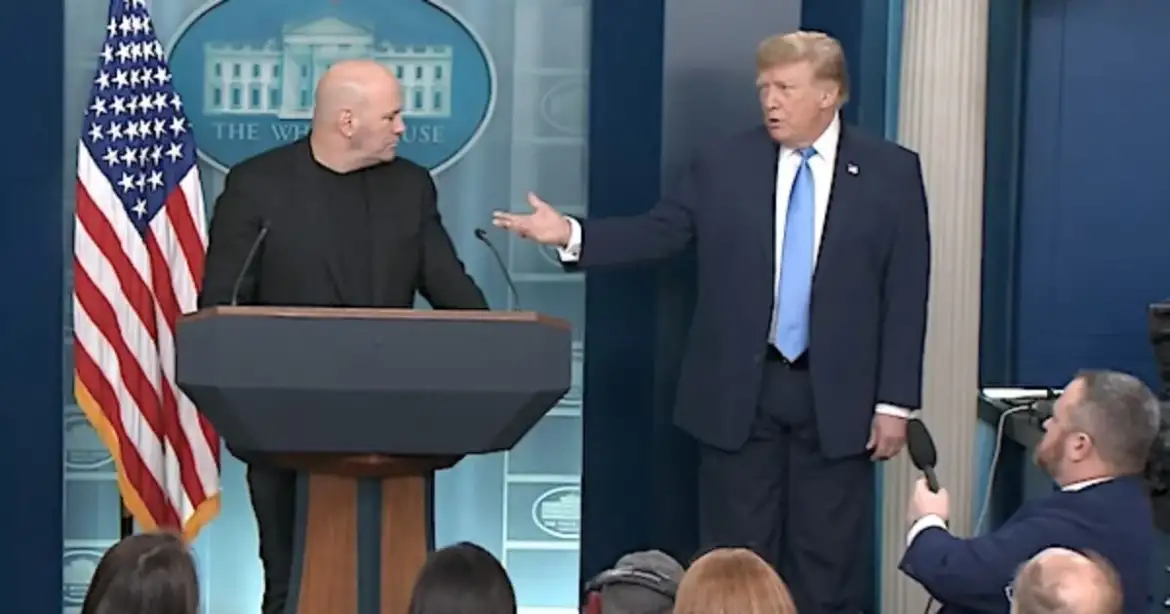

The Supreme Court agreed to toss a lower court ruling in favor of a male inmate who identifies as a woman and wants to be housed in a women’s unit.
On Monday, the high court sent the case back for reconsideration by the 10th U.S. Circuit Court of Appeals in light of recent rulings upholding state restrictions on transgender policies.
The plaintiff in the Colorado case was Darlene Griffith, a male inmate who identifies as a woman. While awaiting trial in the El Paso County jail in 2020, Griffith sued after being housed in the male unit and denied access to women’s items in the commissary such as lipstick and underwear, KRCC reported.
Griffith alleged sexual assault by a male inmate and mistreatment by male deputies.
The Supreme Court threw out a ruling that found a Colorado prison violated a transgender inmate’s rights.
The case involves prison housing, clothing and strip searches. A federal appeals court must now reconsider it. https://t.co/30PfVHGZyI
— The Center Square (@thecentersquare) November 9, 2026
The 10th Circuit ruled in 2025 that the jail’s sex-based housing policy had to meet heightened scrutiny. However, that ruling preceded two major Supreme Court decisions: a 2025 ruling upholding a Tennessee law banning gender-transition treatments for minors, and a 2026 ruling upholding a West Virginia law barring males from girls sports.
The office of El Paso County Sheriff Joseph J. Roybal asked the high court to decide whether such challenges should receive heightened scrutiny.
In Roybal v. Griffith, the high court ordered the lower court to reconsider its ruling in favor of Griffith based on the Supreme Court’s transgender precedents.
The Justice Department cited the two transgender cases as it joined the sheriff in asking the high court to intervene.
“The petition for a writ of certiorari is granted. The judgment is vacated, and the case is remanded to the United States Court of Appeals for the Tenth Circuit for further consideration in light of West Virginia v. B. P. J., 609 U. S. 958 (2026), and United States v. Skrmetti, 605 U. S. 495 (2025),” the high court’s order said.
[Editor’s note: This story originally was published by The Daily Signal.]